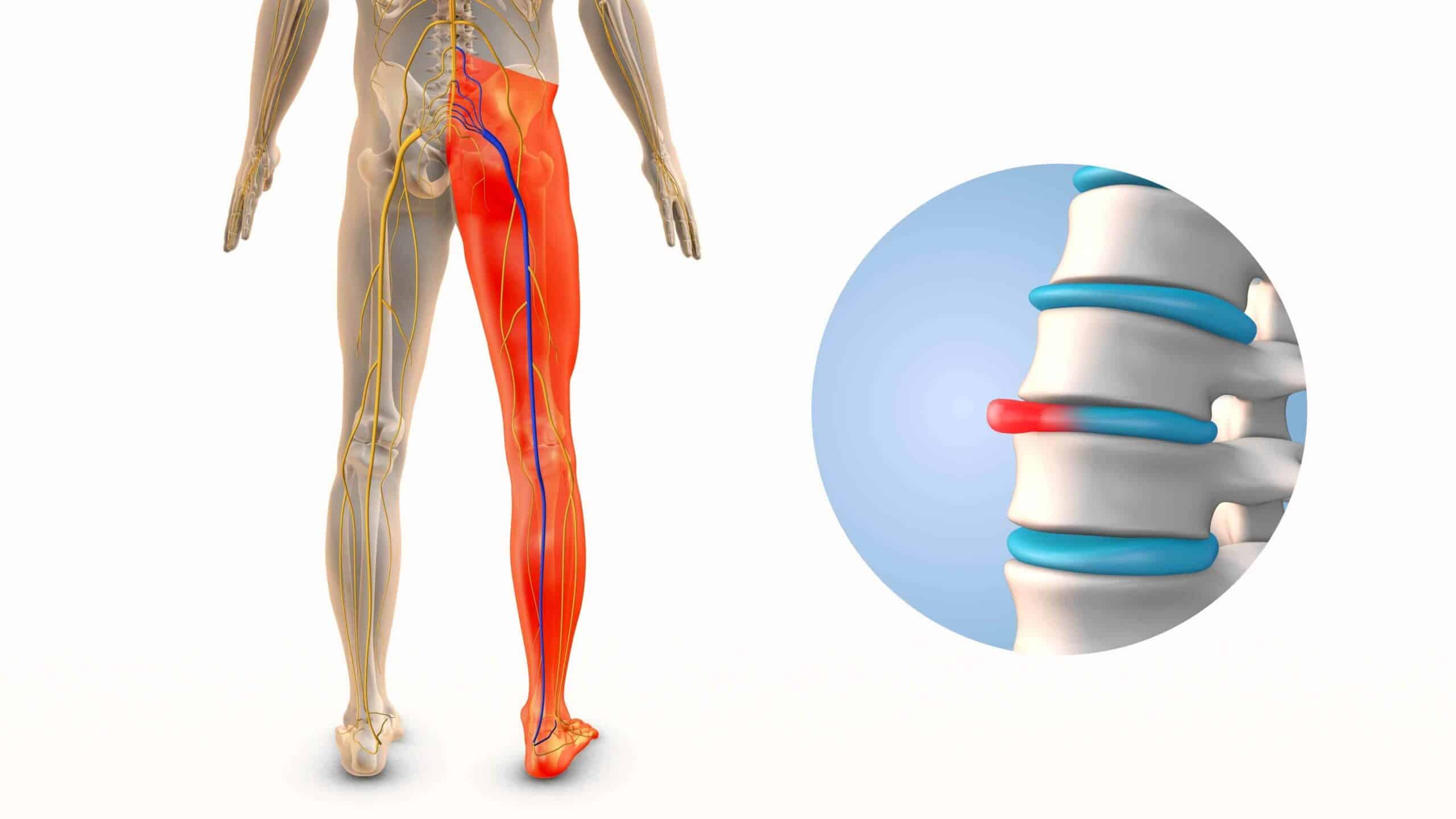
Si sufres dolor persistente en la zona lumbar o en las piernas tras pasar muchas horas en el trabajo, es posible que necesites un tratamiento adecuado para la ciática. Muchos trabajadores desarrollan dolores de origen neurológico debido a lesiones por esfuerzo repetitivo, al levantamiento de cargas pesadas o a una ergonomía deficiente.
Con «Workers’ Comp Doctors», facilitamos a los pacientes el contacto con médicos de confianza especializados en el diagnóstico y el tratamiento de estas lesiones. especializados en el diagnóstico y el tratamiento de estas lesiones. En esta guía, Workers’ Comp Doctors explicará qué es la ciática y cómo se trata.
¿Qué provoca el dolor de ciática relacionado con el trabajo?

Según la Oficina de Estadísticas Laborales, cada año se producen millones de lesiones laborales no mortales, muchas de las cuales son trastornos musculoesqueléticos derivados del esfuerzo excesivo y el estrés repetitivo. En 2018, se registraron 900 380 lesiones laborales en el sector privado que requirieron días de baja, de las cuales el 30 % fueron trastornos musculoesqueléticos, incluidas lesiones de espalda y nerviosas como la ciática. Según datos sobre lesiones y enfermedades laborales en EE. UU., el sector privado registró 976 090 casos de trastornos musculoesqueléticos, incluidos 502 380 que implicaron días de baja laboral, entre 2023 y 2024, lo que pone de relieve lo frecuentes que son las lesiones ergonómicas y nerviosas relacionadas con el trabajo.
El nervio ciático puede irritarse debido a movimientos repetitivos, a permanecer sentado durante mucho tiempo o a un trabajo físicamente exigente. Un tratamiento oportuno de la ciática puede evitar que los síntomas empeoren.
Las causas más comunes de la ciática relacionada con el trabajo son:
- Levantamiento de cargas pesadas: El esfuerzo repetido en la zona lumbar puede provocar una hernia discal.
- Estar sentado durante mucho tiempo: Los trabajos de oficina o que implican conducir aumentan la presión sobre los discos vertebrales.
- Movimientos repetitivos: Inclinarse o girar con frecuencia puede irritar las estructuras de la columna vertebral.
- Mala postura: La desalineación ejerce una presión adicional sobre la parte inferior de la columna vertebral.
Los síntomas pueden incluir un dolor agudo que se extiende por una de las piernas, entumecimiento u hormigueo. Sin un tratamiento adecuado para la ciática, estos problemas pueden agravarse y provocar dolor crónico o una reducción de la movilidad.
Cómo el tratamiento de la ciática comienza con un diagnóstico adecuado
Un tratamiento eficaz de la ciática comienza con una evaluación realizada por un médico especializado en indemnizaciones por accidentes laborales o por un profesional sanitario cualificado.
La atención médica para la ciática de origen laboral suele incluir un reconocimiento físico, pruebas de diagnóstico por imagen, como resonancias magnéticas o tomografías computarizadas, y un análisis de tu historial laboral. Este paso es esencial para el diagnóstico y el tratamiento de la ciática de origen laboral y garantiza que tu plan de tratamiento se centre en la causa del problema.
Opciones de tratamiento que ofrecen los médicos del seguro de accidentes de trabajo

Una vez realizado el diagnóstico, un médico especializado en indemnizaciones por accidente laboral recomendará un plan de tratamiento personalizado. El tratamiento de la ciática en el marco de las indemnizaciones por accidente laboral se centra en reducir la inflamación, aliviar la presión sobre el nervio y recuperar la movilidad.
Entre los enfoques habituales se incluyen la fisioterapia para fortalecer el soporte de la columna vertebral, la quiropráctica para realinear la columna, el tratamiento farmacológico para reducir el dolor y la adaptación de la actividad física para prevenir nuevas lesiones.
Los tratamientos conservadores para la ciática, como la fisioterapia, son eficaces en la mayoría de los casos y suelen aliviar los síntomas en cuestión de semanas. No obstante, los síntomas persistentes pueden requerir inyecciones o intervenciones mínimamente invasivas.
Por qué conviene acudir cuanto antes a un médico especializado en accidentes laborales
Retrasar la atención médica puede hacer que la ciática se agrave y resulte más difícil de tratar. Las investigaciones demuestran que los pacientes con ciática crónica que dura más de seis meses obtienen peores resultados que aquellos con dolor agudo que reciben una intervención temprana.
Un médico especializado en indemnizaciones por accidentes laborales conoce los patrones de las lesiones en el lugar de trabajo y ofrece una atención especializada adaptada a las exigencias del puesto. Esto garantiza que tu plan de recuperación favorezca tu curación y te permita reincorporarte al trabajo de forma segura.
Tratamiento a largo plazo de la ciática laboral
El tratamiento de la ciática de origen laboral no termina con el tratamiento inicial. Es posible que te recomienden mantener una postura correcta, realizar ejercicios de estiramiento o fortalecimiento a diario, utilizar material ergonómico y evitar los movimientos repetitivos. Estas medidas preventivas reducen significativamente el riesgo de recidiva y contribuyen a un alivio duradero.
Cómo te ayudan los médicos del seguro de accidentes laborales a recuperarte

El tratamiento de la ciática requiere abordar tanto los síntomas como las causas subyacentes. Los médicos que figuran en nuestro directorio ofrecen diagnósticos precisos y una atención eficaz para las lesiones laborales, ayudándote a recuperarte de forma segura. Obtén más información explorando y comprender la diferencia entre los médicos especializados en indemnizaciones por accidente laboral y los profesionales de atención primaria
Los médicos que figuran en nuestro directorio aceptan la mayoría de los planes de seguro, incluidos los de indemnización por accidente laboral, los de responsabilidad civil sin culpa y los de PIP (protección contra lesiones personales). Es posible que haya citas disponibles para el mismo día. Llama a «Workers’ Comp Doctors» al (888) 533-0870 hoy mismo para encontrar un profesional sanitario que ofrezca un tratamiento especializado para la ciática en Nueva York o Nueva Jersey.
Preguntas frecuentes
A continuación, te ofrecemos respuestas a preguntas frecuentes sobre la ciática y las lesiones laborales.
¿Qué provoca la ciática en el trabajo?
La ciática en el trabajo suele estar provocada por lesiones por esfuerzo repetitivo, levantar cargas pesadas o permanecer sentado durante mucho tiempo, lo que comprime el nervio ciático.
¿Cómo diagnostican los médicos la ciática de origen laboral?
Los médicos diagnostican la ciática de origen laboral mediante exploraciones físicas, pruebas de imagen y un análisis de las actividades relacionadas con tu trabajo.
¿Puede desaparecer la ciática sin tratamiento?
La ciática leve puede mejorar por sí sola con reposo, pero los casos que no se tratan pueden empeorar, por lo que es importante acudir a un profesional sanitario.
¿Cuál es el mejor tratamiento para la ciática?
El mejor tratamiento para la ciática suele consistir en un enfoque combinado que incluye fisioterapia, medicación y cambios en el estilo de vida adaptados a tu caso concreto.